La Palma Park Way Promenade Project
Award
Sustainable Engineering Project
Description
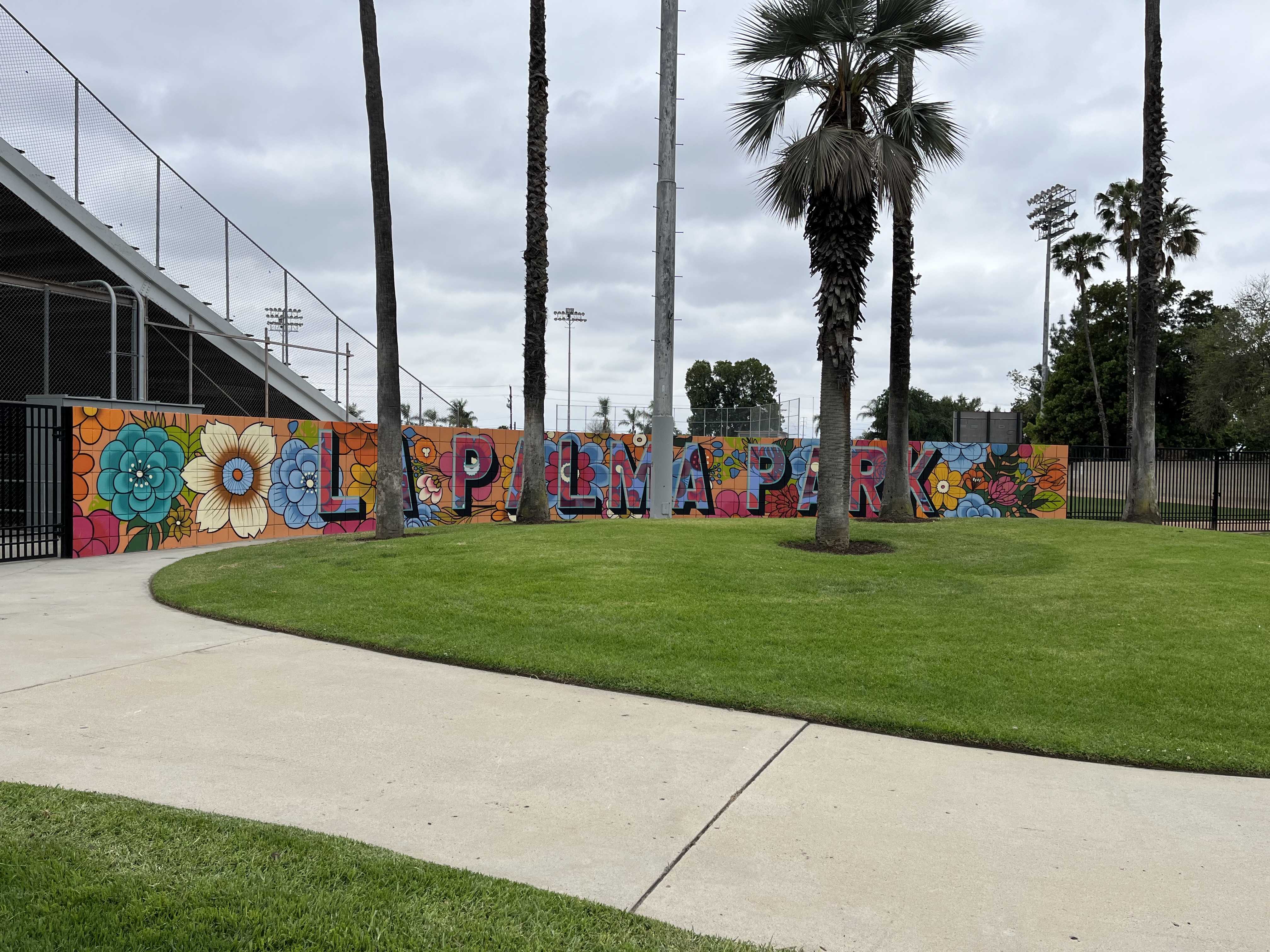
The La Palma Park Way Promenade transforms underused streets into a safe, green, and welcoming extension of La Palma Park. Developed through years of community input and delivered with Clean California funding, the project converts a two-lane road into a one-way road, adds walkways, crosswalks, shade trees, stormwater capture, and public art. The project provides long-term environmental and social benefits for this underserved neighborhood by enhancing access to recreation and social services. The project stands out as a creative reimagining of existing infrastructure into a vibrant public asset. Instead of acquiring new land, the project reclaims two underutilized streets, layering recreation, mobility, and environmental sustainability into one cohesive design. Features include narrowing North La Palma Park Way to create safer pedestrian and bicycle corridors, planting 53 drought-tolerant trees, installing permeable paving to capture over 115 acre-feet of storm water, and setting the stage for a gateway to the La Palma Park enhancements currently in design. These completed improvements were shaped by extensive, multilingual community engagement, ensuring the design reflects resident priorities. By aligning safety, ecology, and identity, the project not only transforms a high-visibility entrance to La Palma Park but also serves as a replicable model for how built-out, disadvantaged neighborhoods can leverage green infrastructure to deliver lasting social, cultural, and environmental value.
La Palma Park Way Promenade elevates quality of life by creating a healthier, more accessible, and more beautiful environment for thousands of residents. In a neighborhood historically lacking safe sidewalks, shade, and bicycle connections, the project introduces continuous pathways, high-visibility crosswalks, and bike corridors that improve mobility for children, seniors, and families. New trees, landscaping, and permeable paving reduce the urban heat island effect, improve air quality, and recharge groundwater, addressing both climate resilience and neighborhood comfort. Public art celebrates community culture and instill pride, while upgraded lighting, trash receptacles, and anti-littering campaigns create a cleaner, safer public space. These improvements enhance the setting for adjacent food distributions and health clinics, ensuring that vital services are delivered in a more dignified and welcoming environment. Together, these improvements expand recreational access, promote environmental awareness, and create a vibrant community gathering place where people can connect and thrive.
Branch